

Why Free Users Won't Tell You What's Broken (And Paid Users Will)
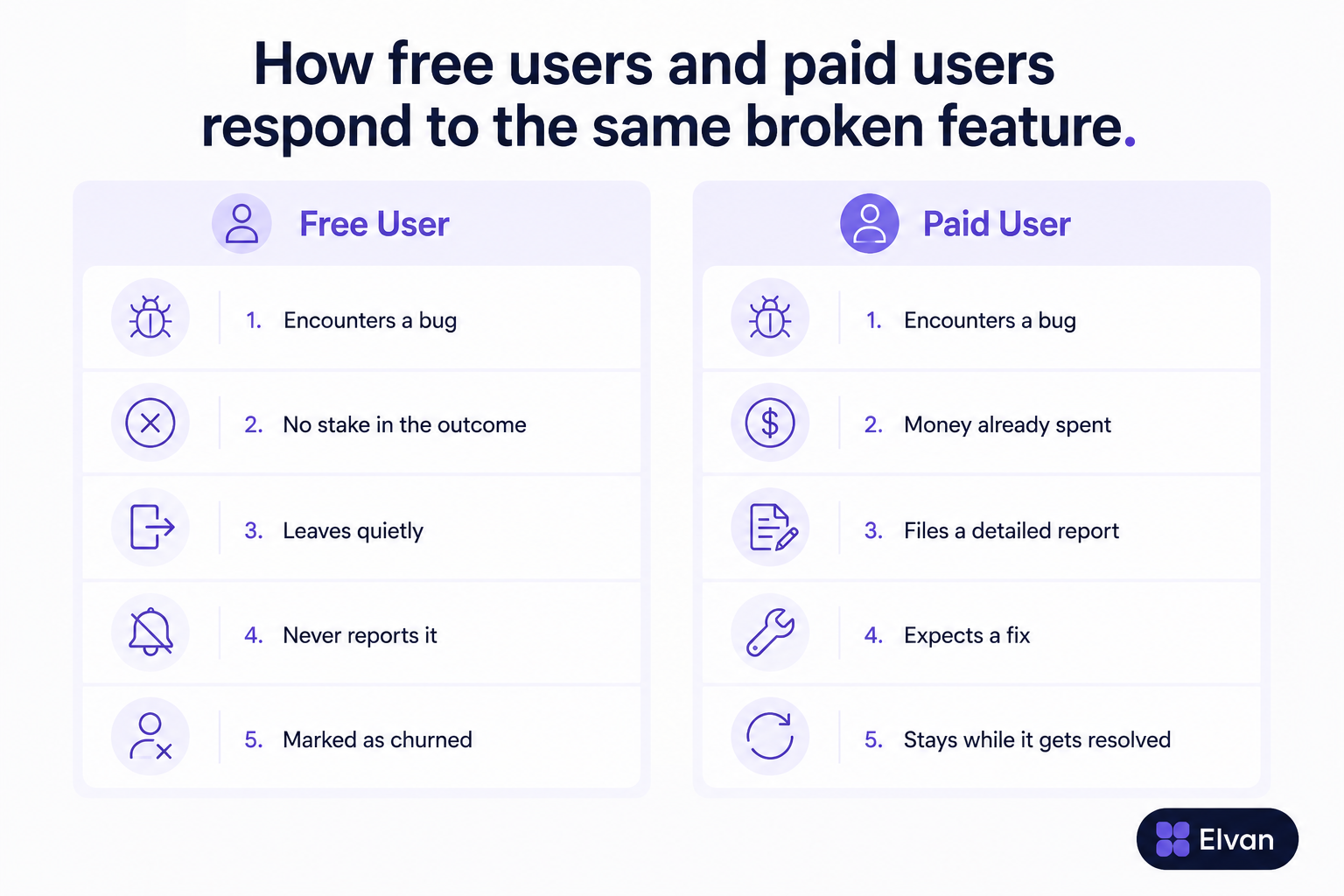
A free user hits a bug, shrugs, and closes the tab. A paid user hits the same bug and writes you a three paragraph email by lunch. Same product. Same problem. Two completely different reactions. If you build your feedback program around the wrong group, you end up fixing things nobody cares about while the real problems stay invisible.
Most teams assume silence means things are fine. With free users, silence usually means the opposite. It means they were never invested enough to say anything at all.
The economics of who bothers to complain
Complaining costs effort. Writing a support ticket, filling out a survey, replying to a feedback request, all of it takes time and attention that people only spend when they have a reason to.
Paid users have that reason. They handed you money, and now they want the thing they paid for to work. A broken feature is not an annoyance to them. It is a loss. So they tell you, often in detail, because getting it fixed protects an investment they already made.
Free users carry none of that weight. There is no sunk cost, no expectation of service, no relationship to protect. When something breaks, the rational move is to leave and try the next thing. Telling you would be doing unpaid labor for a product they have not committed to. So they do not.
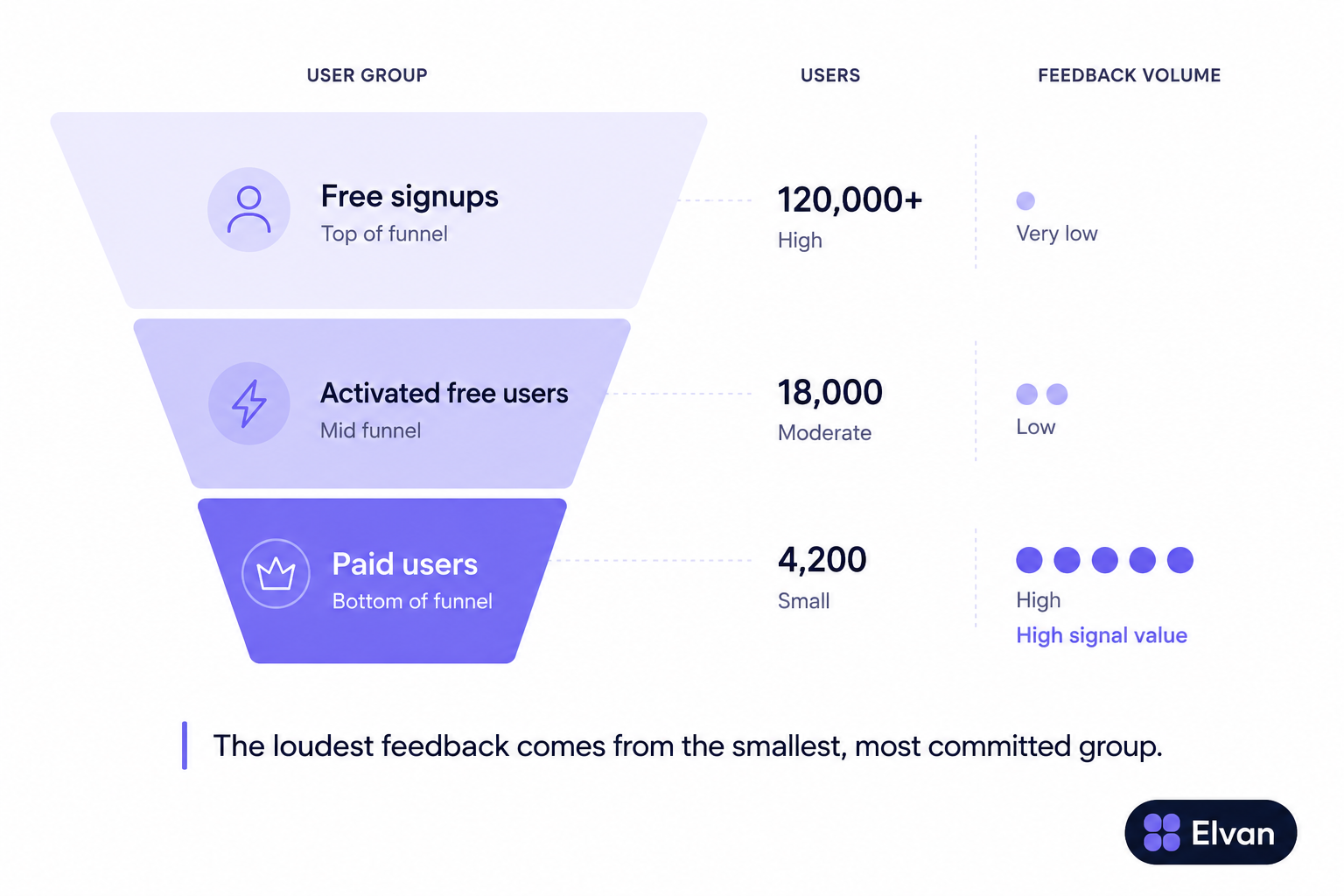
This is why the feedback inbox of an early stage product can look strangely quiet even when usage is high. The people most likely to churn are the least likely to explain why.
Silent churn is the most expensive churn
When a paid customer is unhappy, you usually get a warning. A drop in usage, a frustrated ticket, a lower survey score. You have a window to act.
Free users skip all of that. They do not warn you. They do not score you a 2 and give you a chance to recover. They simply stop showing up, and the only trace they leave is a flat line in your activation dashboard.
The damage is that you learn nothing. A churned paid customer at least tells you what went wrong on the way out. A churned free user takes the reason with them. Multiply that across hundreds of signups and you have a product that is leaking users for reasons you cannot name.
This is the trap. Teams look at their feedback, see mostly positive notes from a small group of engaged paid users, and conclude the product is in good shape. Meanwhile the silent majority has already decided otherwise and moved on without a word.
The feedback you collect is not the feedback that matters
Here is the uncomfortable part. The feedback that reaches you is filtered by who is willing to give it, not by what is most important to fix.
If your survey responses skew heavily toward paid power users, you will hear a lot about advanced features and edge cases. Real problems, worth solving, but they are the problems of people who already like you. The first run experience, the confusing onboarding step, the moment a free user gives up on day one, none of that shows up because the people who hit those walls are gone before you ever ask.
So you optimize for the customers you have instead of the ones you are losing. The roadmap fills with refinements for the loyal few while the leak at the top of the funnel stays exactly where it was.
What to do about it
The fix is not to ignore paid feedback. It is to stop treating the absence of free user feedback as a sign that nothing is wrong, and to go get the signal before people leave.
Ask while they are still in the moment. A free user will not write you an email three days later. But they will answer a single question that appears right after they hit friction. Timing beats effort. A survey that fires inside the product, seconds after the problem, catches the reaction while it is still real. A batch email survey two days later only reaches the people who stuck around, which defeats the purpose.
Lower the cost of responding to almost nothing. The more effort a survey demands, the more your responses skew toward your most committed users. One tap. One score. One optional comment. Free users will give you that much when they will give you nothing else.
Segment feedback by plan, then read it differently. A complaint from a paid user tells you what is broken for someone who chose to stay. Silence from a free user who just churned tells you what is broken for everyone who left. Both are data. They are not the same data, and a single blended score hides the difference.
Treat free to paid as the real survey. The moment a free user decides whether to upgrade is the most honest feedback they will ever give you, and they give it with their wallet instead of words. Ask the ones who upgrade what almost stopped them. Ask the ones who stay free what would have to change. That answer is worth more than a hundred satisfaction scores from people who already love you.
The point
Free users are not quiet because they are happy. They are quiet because they have no reason to speak, and they leave the moment the product stops being worth the zero dollars they are paying. Paid users speak up because they have something at stake, which makes their feedback rich but also narrow. It tells you how to keep the people who already chose you. It tells you almost nothing about why the others walked.
A feedback program that only listens to the people willing to talk is listening to a biased sample by design. The teams that grow are the ones that go looking for the signal the silent users never volunteer, at the exact moment it exists, before the tab closes for good.
Elvan was built for that. In product surveys that fire at the moment of friction, one tap responses that even uninvested users will answer, feedback segmented by plan so paid signal and free signal never get blended into a meaningless average, and plain English AI summaries that tell you what the numbers actually mean. Setup takes under twenty minutes, and the free tier covers your first hundred responses a month.
Start listening to the users who were never going to email you.

Neil Roy
Content Strategist
Neil is a content strategist specializing in CSAT and NPS surveys, creating educational content that helps businesses understand and improve customer satisfaction. With 10+ years of experience, Neil writes insightful articles and develops content strategies that translate complex survey concepts into accessible, actionable guidance for organizations looking to enhance their customer relationships and business outcomes.