
What eCommerce Brands Get Wrong About NPS
What eCommerce Brands Get Wrong About NPS
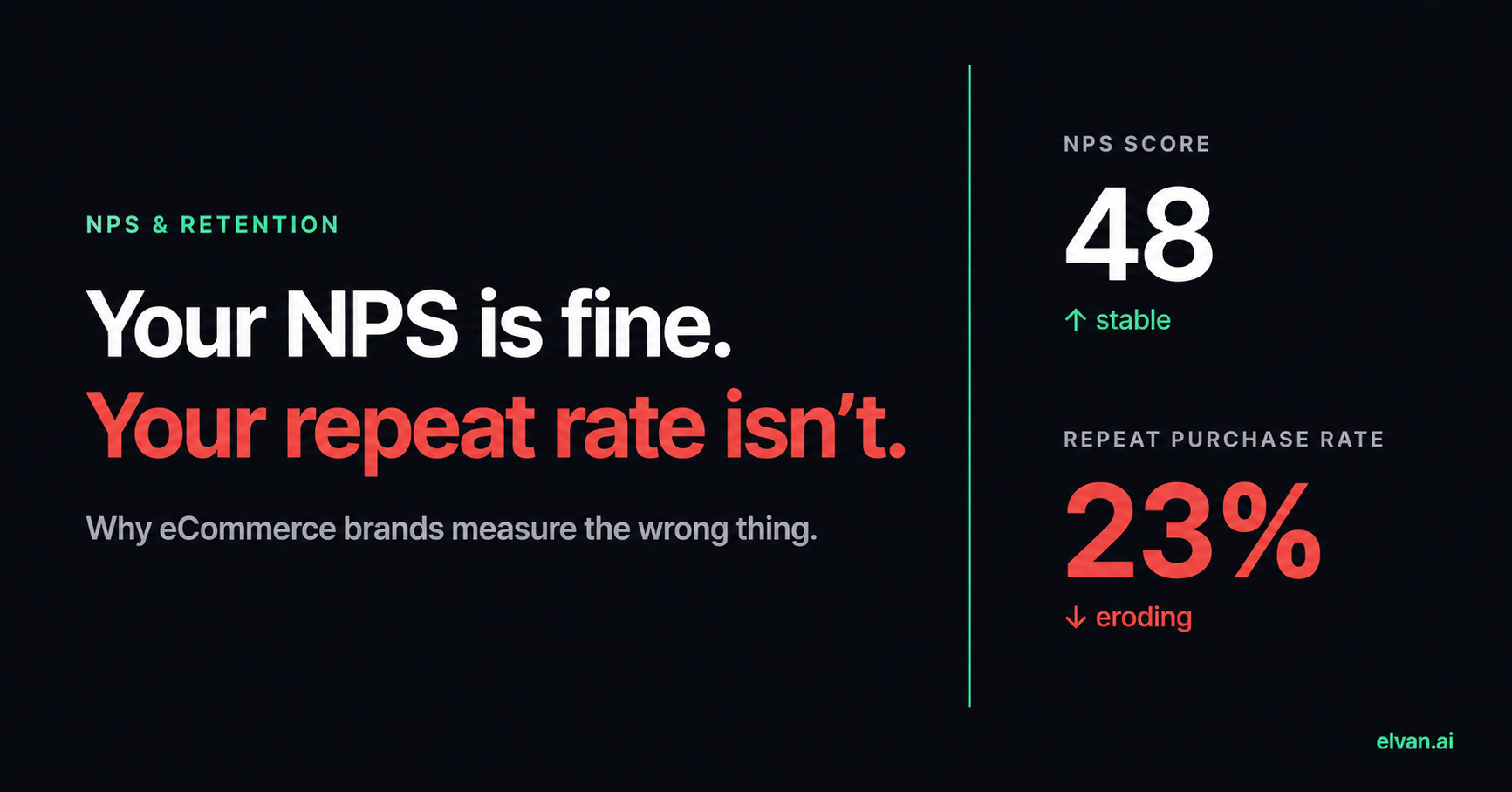
Most eCommerce brands treat NPS as a churn predictor. It is not one, at least not on its own. A high Net Promoter Score tells you how customers felt at the moment you asked. It does not tell you whether they will buy again. That gap is where a lot of retention budgets quietly leak, and almost nobody catches it until the repeat purchase rate starts sliding.
If you run a Shopify or DTC store and you have wired NPS into your stack expecting it to warn you before customers leave, this is the article that explains why the warning rarely arrives on time, and what to measure instead.

Why eCommerce NPS is a lagging signal
NPS asks one question. How likely are you to recommend us, on a scale of zero to ten. It is a good question. It captures sentiment cleanly and it benchmarks well over time. The problem is timing.
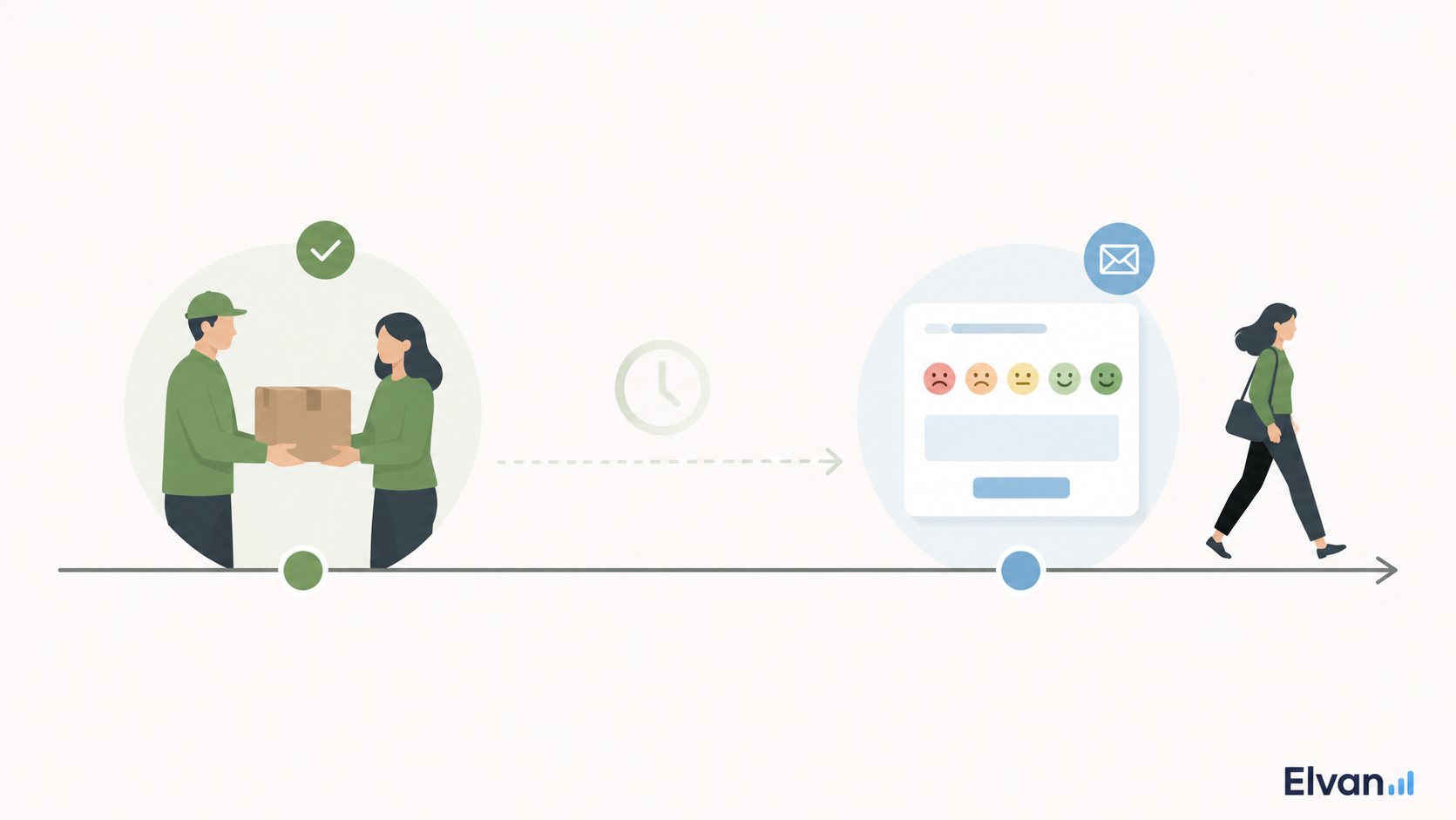
By the time someone answers an NPS survey, the experience that shaped their answer already happened. The slow shipping. The confusing return. The product that did not match the photos. NPS records the residue of all of it after the fact. You are reading the score of a game that already ended.
For a subscription business or a SaaS product, that delay is survivable because the relationship is continuous. You get another month to react. For an eCommerce brand, the relationship between purchases is mostly silence. A customer can have a quietly bad experience, never complain, never fill out a survey, and simply not come back. Your NPS can hold steady at 45 while your repeat rate erodes underneath it, because the people who left stopped answering your surveys before they left.
There is a directional relationship worth knowing. Research across industries has found that a drop of roughly ten points in NPS tends to track with something in the range of five to eight percent lower retention. Useful as a trend line. Not precise enough to act on for any individual customer or any single cohort. Treat it as a weather report, not a diagnosis.
The survey reaches the wrong people
Here is the structural flaw most teams never notice. Email-based NPS surveys go to the customers who open your emails. That is your most engaged segment, the people already inclined to stay. Your detractors stopped opening weeks ago. They are not ignoring the survey out of spite. They have already moved on.
So the responses skew positive, not because your customers are happy, but because the unhappy ones self-selected out of the sample. You end up measuring loyalty among the already loyal. The score looks fine. The churn keeps happening in the part of the list you can no longer reach.
This is why an eCommerce NPS program can run for a year and never once predict a churn event. The instrument is pointed at the wrong crowd.
What actually predicts repeat purchases
Behavior predicts churn. Sentiment explains it.
The two numbers that tell you whether an eCommerce customer is drifting away are purchase frequency and recency. How often someone buys, and how long it has been since the last order. When the gap between orders stretches past a customer's normal rhythm, that is your real churn signal, and it shows up in your order data well before it shows up in a survey.
NPS becomes valuable when you read it against that behavioral data instead of in isolation. A customer whose order frequency is slipping and who also gave you a six last quarter is a different problem than a six from someone buying every three weeks like clockwork. Same score. Completely different situation. The score alone could not tell them apart. The behavior could.
So the fix is not to abandon NPS. It is to stop asking it to do a job it was never built for, and to add the measurement that catches problems while you can still fix them.
Post-purchase CSAT closes the gap
The measurement that fills the gap is post-purchase CSAT.
CSAT is triggered by an event rather than a calendar. It fires right after something specific happened. The order arrived. The return got processed. The support ticket closed. You are asking about a fresh experience while it is still fresh, from the person who just lived it, including the ones who would never have opened a quarterly NPS email.
This matters for eCommerce in a way it does not for most software. The post-purchase window is short. A customer's feeling about your brand hardens within days of the package arriving. Catch a disappointed customer in that window and you can still make it right, with a replacement, a refund, a note from a human. Wait three months for the NPS sweep and that customer is already gone, and probably telling other people why.
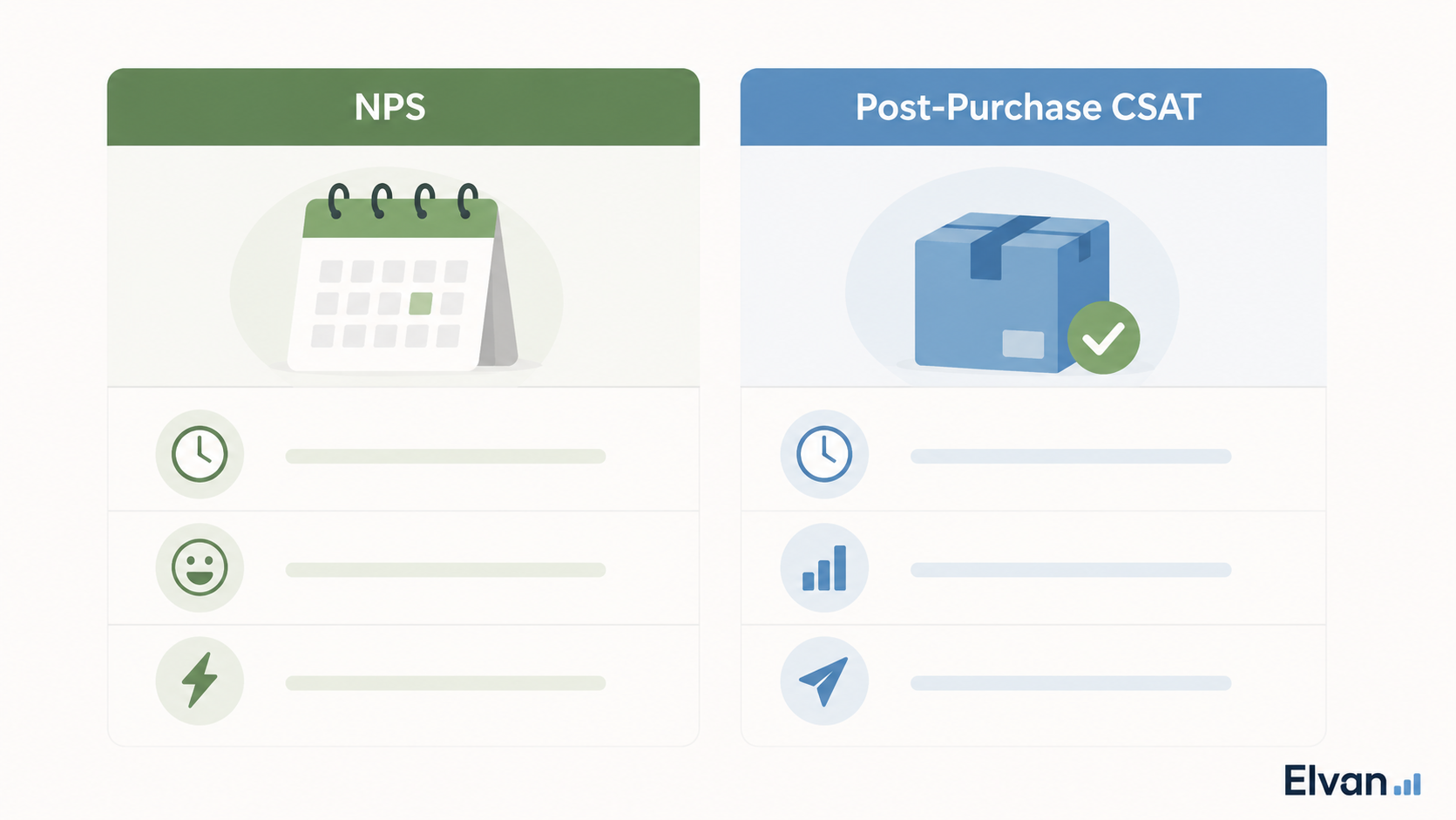
Run post-purchase CSAT and quarterly NPS together and you get both halves of the picture. CSAT tells you what is breaking at the level of individual orders, in time to act. NPS tells you whether the overall relationship is trending up or down across the base. One is the smoke detector. The other is the annual inspection. You want both.
A simple comparison of when to send each survey, what each one measures, and what action it triggers works well as a visual here. Worth dropping in as an image rather than text.
How to set this up without a developer
This is usually where eCommerce teams stall. The metrics make sense, but wiring a survey to fire after every order sounds like an engineering project, and the dev queue is full.
It does not have to be one. Elvan was built so an operator can stand up a post-purchase CSAT survey in under twenty minutes, no developer required. You embed the survey directly into the email flows you already run in Klaviyo, Mailchimp, or any tool that supports an HTML embed, so the question lands in the order confirmation or the post-delivery follow-up you are already sending. The customer answers in one tap, inside the email, while the experience is still recent.
Every survey in Elvan is two questions maximum, which keeps response rates high and the data clean. When responses come in, the AI Summary reads them in plain English and tells you what is happening, why, and what to do about it. You walk into your next review with a clear read on post-purchase satisfaction instead of a spreadsheet you have not had time to open.

Elvan runs NPS, CSAT, CES, and five other survey types from one place, starting free for your first hundred responses a month and $49/month after that. So you can run the quarterly NPS sweep and the always-on post-purchase CSAT side by side, without paying enterprise prices for the privilege.
NPS is not the problem. Asking it to predict churn on its own is. Pair it with your behavioral data, add post-purchase CSAT to catch problems while they are still fixable, and you finally get a feedback program that tells you something before the customer is already gone.
See how post-purchase CSAT works for your store: elvan.ai/csat-software

Neil Roy
Content Strategist
Neil is a content strategist specializing in CSAT and NPS surveys, creating educational content that helps businesses understand and improve customer satisfaction. With 10+ years of experience, Neil writes insightful articles and develops content strategies that translate complex survey concepts into accessible, actionable guidance for organizations looking to enhance their customer relationships and business outcomes.